Top Benefits of Using a Fluidized Bed Processor for Powder Processing?
In the world of powder processing, the use of a Fluidized Bed Processor is increasingly recognized for its numerous advantages. According to the "Powder Processing and Handling Market Report 2023," the demand for efficient processing techniques is rising. Industries such as pharmaceuticals, food, and chemicals benefit from improved consistency and quality in their product outputs.
A Fluidized Bed Processor enhances heat and mass transfer. This technology also facilitates uniform drying and granulation. Reports indicate that using such processors can increase production efficiency by as much as 30%. This capability addresses challenges like uneven particle distribution and heat spots, which can complicate traditional methods.
However, not all processors are created equal. Selection requires careful consideration of materials and process requirements. Some processors may fall short in scalability or adaptability, leading to potential operational inefficiencies. Understanding these nuances is crucial. Exploring the full range of benefits can lead to optimized production methods for various industries.
Top Benefits of Using a Fluidized Bed Processor for Powder Processing
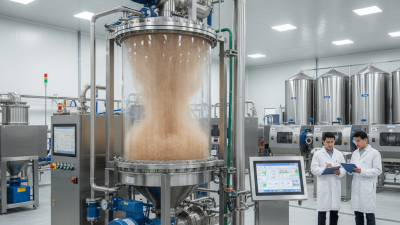
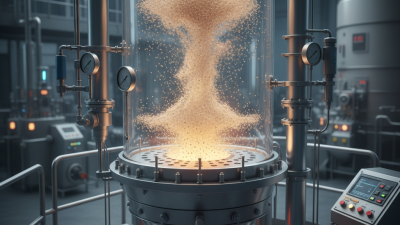
Fluidized bed processors offer distinct advantages for powder processing. These systems use a bed of particles suspended by an upward flow of gas, creating an efficient environment for various operations. This method enhances heat and mass transfer, which is crucial for uniform particle treatment. The result is a high-quality end product, whether for pharmaceuticals, food, or chemicals.
One significant benefit is reduced processing time. The rapid movement of particles allows for quicker drying and mixing. Companies can improve throughput without compromising quality. However, achieving the right process parameters can be challenging. Some may struggle with particle agglomeration or inconsistent flow, which can require adjustments and monitoring. This often leads to a learning curve where experience is vital.
Additionally, fluidized bed processors can flexibly accommodate different materials. This adaptability opens doors for companies to experiment with new formulations. Yet, the diversity in material properties can lead to unexpected behaviors during processing. Continuous refinement of techniques is essential to address these issues effectively. As industries evolve, the fluidized bed processor remains a powerful tool, but it demands careful attention to achieve its full potential.
Top Benefits of Using a Fluidized Bed Processor for Powder Processing
| Benefit |
Description |
Applications |
| Uniform Particle Size |
Provides consistent size distribution for optimal processing. |
Pharmaceuticals, food products |
| High Efficiency |
Enhances drying and coating processes, reducing time and energy consumption. |
Chemical powders, agricultural products |
| Versatility |
Can be used for various processes including granulation, coating, and drying. |
Cosmetics, fertilizers |
| Scalability |
Easily scalable from laboratory to industrial production. |
Research and development, manufacturing plants |
| Reduced Dust Generation |
Minimizes dust formation, improving workplace safety. |
All powder processing industries |
| Enhanced Product Quality |
Improves the physical properties of the finished product, such as solubility and flowability. |
Pharmaceuticals, dietary supplements |
Enhanced Uniformity in Powder Mixing and Granulation Processes
The fluidized bed processor is a game-changer for
powder processing, particularly in
mixing and granulation. This technology enhances uniformity by creating a controlled environment where particles behave like a fluid.
Heat and air are equally distributed, allowing for
uniform particle interaction. This results in
consistency, which is crucial for quality control.
In traditional methods, achieving uniformity can be a struggle. Variations in particle size or moisture can lead to clumping or
segregated mixtures. A fluidized bed system minimizes these risks by keeping particles in constant motion.
This motion promotes effective blending and minimizes
dead zones, where materials might not interact optimally.
However, it is essential to recognize potential challenges. Not every powder is suitable for
fluidized bed processing. Some powders may not achieve the desired fluidization.
Operators need to assess material characteristics closely. Inadequate understanding of these parameters can lead to inconsistent results.
Having a comprehensive understanding of the specific powders being processed is vital for
successful utilization of this technology.
Efficient Heat and Mass Transfer in Fluidized Bed Systems
Fluidized bed processors are revolutionizing powder processing due to their efficient heat and mass transfer capabilities. In these systems, powered particles are suspended by a stream of gas, allowing for uniform heat distribution. This method ensures that all particles reach the desired temperature quickly and consistently. It minimizes the risk of hot spots, which can lead to degradation or inconsistent product quality.
The fluidization process enhances interactions between particles and gases. This leads to improved reaction times and optimized drying processes. However, achieving the ideal fluidization can be tricky. Factors such as particle size and density play critical roles. Careful adjustments and monitoring are essential to maintain efficiency. Even slight variations can impact overall performance, making it vital to understand and control these elements in practice.
Furthermore, fluidized bed systems are inherently versatile. They can accommodate different types of powders, which makes them suitable for various applications. Yet, the complexity of designing a perfect system is a challenge. Engineers must constantly evaluate performance to ensure reliability and efficiency. This ongoing need for assessment highlights the dynamic nature of fluidized bed technology in powder processing.
Reduction of Processing Time and Energy Consumption
Fluidized bed processors have emerged as essential tools in powder processing industries. A key advantage of this technology lies in its capacity to reduce processing time significantly. The fluidization technique allows for uniform heat and mass transfer, enhancing the efficiency of the drying and granulation processes. This leads to faster processing cycles, which can be crucial in high-demand production environments.
Energy consumption is another area where fluidized bed processors excel. These systems utilize air or gas to suspend and fluidize the particles, minimizing the energy needed for operation. By optimizing airflow and utilizing heat effectively, companies can lower their energy costs. However, this requires careful monitoring and adjustments to ensure the system runs efficiently. Not every setup achieves its full potential. It's essential for operators to review performance metrics regularly. Small changes can make a difference, such as adjusting temperature or air velocity.
While the benefits are clear, modernization of existing systems may pose challenges. Older equipment might not adapt well to newer techniques. Retrofitting can sometimes be costly and complex. Thus, businesses should weigh the pros and cons thoughtfully. Engaging with experts for guidance can lead to better decision-making in this evolving field.
Flexibility in Formulation for Diverse Powder Characteristics
Fluidized bed processing offers remarkable flexibility in formulation. This technique enables manufacturers to cater to diverse powder characteristics effectively. A report by the International Journal of Pharmaceutics highlights that fluidized bed processors can handle a broad range of particle sizes, from 20 microns to 500 microns. This diversity is crucial for industries ranging from pharmaceuticals to food processing.
The adjustable operating parameters of fluidized bed processors allow for precise control over granulation and coating processes. For instance, modifications in airflow and temperature can optimize the particle distribution and morphology. A study reveals that proper control can improve the dissolution rates of active pharmaceutical ingredients by nearly 30%. This adaptability leads to more efficient formulations tailored for specific applications.
However, the complexity of fluidized bed operations poses challenges. Process optimization requires extensive experimentation and data analysis. The learning curve can be steep for newcomers. Variability in powder behavior may also complicate consistency. Manufacturers need to focus on continuous improvement to fully benefit from this technology. Despite these hurdles, the potential for tailored applications remains a significant advantage, encouraging ongoing exploration in the industry.
Conclusion
The use of a Fluidized Bed Processor in powder processing offers numerous advantages that significantly enhance operational efficiency and product quality. One of the key benefits is the improved uniformity in powder mixing and granulation processes, which leads to consistent product characteristics. The fluidized bed system also facilitates efficient heat and mass transfer, allowing for quicker processing times and reduced energy consumption.
Additionally, Fluidized Bed Processors provide flexibility in formulations, accommodating a wide range of powder characteristics. This adaptability greatly aids in product development. Moreover, the technology significantly improves product quality by minimizing agglomeration in powders, resulting in a more desirable end product. Overall, the integration of Fluidized Bed Processors in powder processing represents a transformative approach in the industry.