




Blog
China Top 10 Tableting Machine Manufacturers for Buyers?
Choosing a tableting machine is not just a matter of comparing prices. Buyers need equipment that fits their product, production scale, and available floor space. This guide to China’s top 10 tableting machine manufacturers offers a practical starting point for that search. It focuses on what buyers can verify: machine configurations, stated output ranges, customization options, documentation, and after-sales support. Tableting Machines vary widely, even when product photos look similar.
A useful comparison begins with the tablet itself. Consider its diameter, thickness, shape, and target weight, then ask manufacturers which press configuration suits those requirements. Check the turret design, tooling compatibility, control interface, and changeover process. Small details matter. A difficult-to-clean surface or slow tool change can affect daily production more than a headline speed figure. Request clear technical specifications and confirm whether quoted output depends on a particular material or operating condition.
The ranking should be treated as a shortlist, not a final verdict. Supplier capabilities and service coverage can change, and published claims do not replace a machine trial. Ask for references from comparable applications, sample tablets, inspection records, and details about installation and operator training. A factory visit or live demonstration may reveal practical issues that a brochure misses. I would also leave room for uncertainty: buyers may weigh price, support, and customization differently. Use the profiles to frame better questions, then compare written quotations against the same requirements before making a decision.
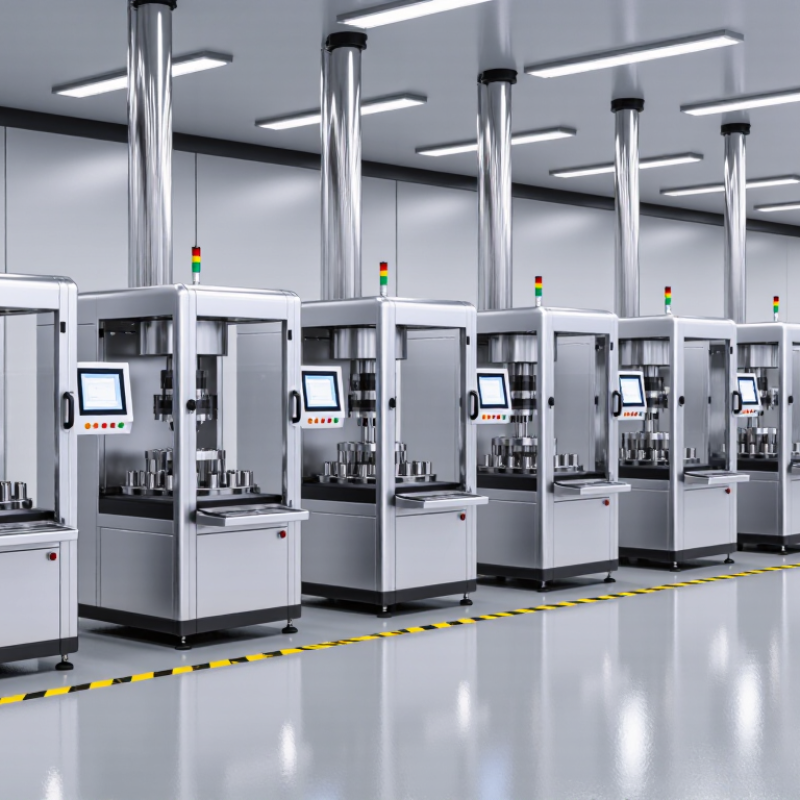
What Tableting Machines Do and Where They Are Used
Tableting machines convert measured powder or granules into uniform tablets through controlled compression. A typical press feeds material into a die, where upper and lower punches shape each dose. Operators monitor fill depth, compression force, tablet weight, and hardness. Small differences matter: uneven granules can produce tablets that vary in thickness or break too easily. Not glamorous work, but essential.
These machines serve pharmaceutical, nutraceutical, and food-production operations, including facilities making vitamin and mineral supplements. They are also used for some household and industrial products, where consistent shape and strength support handling and packaging. IQVIA Institute’s Global Use of Medicines 2024 report projects worldwide medicine spending will exceed $2.3 trillion by 2028. That figure signals broad demand for medicines, but it does not measure tableting-machine sales directly. Buyers should assess the actual product, output rate, and cleaning needs rather than infer equipment demand from market growth alone.
A single-punch press suits development work and smaller batches; rotary presses support higher-volume production with multiple stations. Room to improve remains. A fast machine is not automatically a good fit if powder flows poorly or changeovers take too long. Ask for trial runs using representative material, and review weight variation and compression records. The details show up on the shop floor.
China Top 10 Tableting Machine Manufacturers for Buyers? – What Tableting Machines Do and Where They Are Used
Buyer-oriented guide to ten common tableting machine configurations and their uses. The rows are application categories, not a ranked list of manufacturers. Suitability and output depend on the formulation, tablet dimensions, tooling, operating settings, and required process controls.
| No. | Machine Configuration | What It Does | Typical Uses | Key Buyer Considerations |
|---|---|---|---|---|
| 1 | Single-punch tablet press | Compresses powder or granules into tablets using one set of punches and a die. | Formulation development, teaching laboratories, and small-scale production. | Simple operation and changeover; lower output than rotary presses. Check force capacity, tooling compatibility, and guarding. |
| 2 | Small rotary tablet press | Uses a rotating turret with multiple punch-and-die stations to produce tablets continuously. | Research, pilot batches, and smaller production runs. | Review turret speed range, number of stations, compression-force monitoring, and how easily product-contact parts can be cleaned. |
| 3 | Production rotary tablet press | Compresses tablets at multiple stations on a rotating turret for higher-volume operation. | Routine pharmaceutical, nutraceutical, and other industrial tablet production. | Match capacity to product and shift requirements. Assess feeder design, force control, dust extraction, containment, and tooling availability. |
| 4 | High-speed rotary tablet press | Supports high-throughput compression with automated control and monitoring features. | Large-scale manufacturing where sustained output and process monitoring are priorities. | Confirm performance with the intended formulation. Consider process validation, reject handling, data management, maintenance access, and downstream equipment integration. |
| 5 | Bi-layer tablet press | Feeds and compresses two distinct powder or granule layers into one tablet. | Products requiring separate ingredients, staged release, or a visible two-layer format. | Assess layer-weight control, cross-contamination risks, feeder performance, layer adhesion, and the ability to run product-specific trials. |
| 6 | Multi-layer tablet press | Forms tablets from more than two sequentially fed material layers. | Specialty formulations that need several separated components or programmed release characteristics. | Requires careful control of each feed and compression stage. Verify formulation compatibility, layer integrity, cleaning procedures, and setup complexity. |
| 7 | Effervescent tablet press | Compresses formulations designed to dissolve and release gas in water. | Effervescent supplements, medicines, and other water-dissolving tablet products. | Moisture control is especially important for effervescent formulations. Check room or enclosure humidity requirements, sealing, cleaning, and compatible materials. |
| 8 | Instrumented research tablet press | Measures compression-related parameters to support formulation and process studies. | University and industrial laboratories, tabletability studies, and process development. | Review measurement capabilities, data export, calibration, software, tooling, and whether the system can reproduce relevant production conditions. |
| 9 | Contained tablet press | Uses containment features to help limit operator exposure to potent or hazardous materials during compression. | Manufacturing operations involving materials that require controlled exposure management. | Define containment requirements through a site-specific risk assessment. Evaluate enclosure design, transfer connections, cleaning strategy, and verification methods. |
| 10 | Tablet press for non-pharmaceutical products | Compresses suitable powders or granules into tablets for non-medicinal applications. | Some food, chemical, cleaning, and industrial products, subject to material and regulatory requirements. | Confirm that the product is suitable for compression and that contact materials, tooling, dust controls, and documentation meet the intended application’s requirements. |
Related Posts
-
2026 Top Tablet Presser Types for Global Buyers?
-
What is Natoli Tablet Press and How Does it Work?
-
Discover the Best Natoli Tablet Press for Your Manufacturing Needs?
-
China Top Natoli Tablet Press Supply for Global Buyers?
-
What is the Best Tablets Press Machine for Your Needs?
-
Top Features of the Best Tablet Press for Global Buyers?