How to Choose the Best Powder Milk Mixer for Your Needs?
Choosing the right Powder Milk Mixer can be challenging. With numerous options available, finding one that suits your needs is crucial. Industry expert Dr. Emily Carter emphasizes, "A well-selected powder milk mixer can significantly impact your production efficiency."
Understanding specific requirements is vital. Factors like batch size and mixing time play a role. A suitable mixer ensures consistent texture and quality. However, many fail to consider these aspects, leading to subpar results. It's essential to analyze both technical specifications and real-world performance.
Moreover, not all mixers are created equal. Some may work well for small operations, while others suit large-scale production. Investing time in research can prevent costly mistakes. A Powder Milk Mixer should cater to your needs, but often, users overlook compatibility with their production line. Recognizing these details is not just beneficial; it's necessary for successful outcomes.
Understanding Different Types of Powder Milk Mixers Available
When selecting a powder milk mixer, understanding the types available is crucial. Industry data shows that over 70% of users prefer mixers that provide consistent texture and fast blending. Common types include manual, electric, and high-shear mixers. Manual mixers rely on hand agitation, which can lead to uneven mixing, especially with thicker powders. Electric mixers offer better efficiency but vary in power and speed control. High-shear mixers, often used in commercial settings, create fine emulsions and smooth textures but come at a higher cost and complexity.
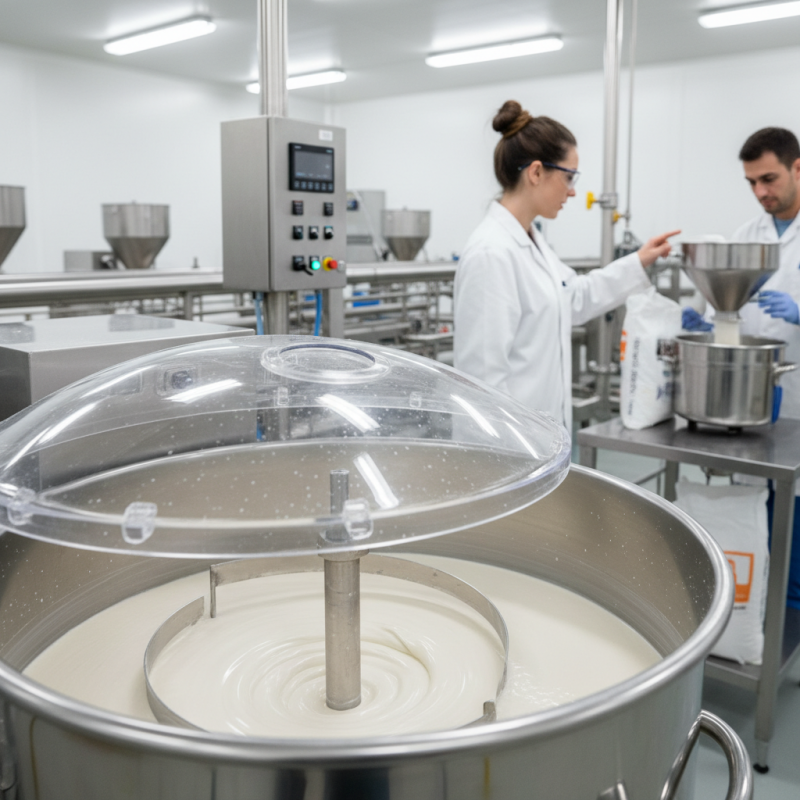
Research from food processing experts indicates that the choice largely depends on the scale and frequency of use. Household users benefit from compact electric mixers with adjustable speeds, ensuring minimal clumps. On the other hand, industrial applications require robust, high-capacity mixers to maintain product consistency. While high-shear machines excel in mixing time, they consume more energy and need expert handling. This sometimes leads to over-processing, which can alter the nutritional profile unintentionally.
It is important to reflect on how user needs evolve over time. Some may start with simple devices but later require more precise technology. Unfortunately, many current guides overlook this progression, offering static recommendations. Adopting a flexible mindset towards mixer selection can lead to better long-term satisfaction. The data supports a dynamic approach rather than a fixed one-size-fits-all solution.
Key Features to Consider When Choosing a Powder Milk Mixer
When selecting a powder milk mixer, several critical features warrant your attention. Efficiency is paramount. A powerful mixer will ensure uniform blending, reducing clumps. Studies show that a mixer with a minimum of 300 watts performs better. The size of the mixing bowl also matters. A larger bowl (at least 1.5 liters) allows for more extensive batches, catering to both home and commercial needs.
Consider the mixing speed settings. A versatile mixer offering multiple speeds can accommodate various powder consistencies and user preferences. The ability to adjust speed is crucial for achieving the desired texture, especially for sensitive formulations. A report from the Dairy Industry Association indicates that smooth blends can lead to a 15% improvement in product quality perception among consumers.
Finally, look at the ease of cleaning. A design that disassembles easily will save time and effort. Durability is another factor; high-quality materials ensure the mixer withstands regular use. However, be wary of over-engineered products. Sometimes, simplicity is more reliable. Balancing these features can be challenging, but they ultimately dictate the mixer’s performance and longevity.
Comparison of Key Features in Powder Milk Mixers
This chart compares key features of different powder milk mixers, including mixing speed, capacity, noise level, power consumption, and price. Evaluating these features can help you choose the best powder milk mixer for your specific needs.
Assessing Your Specific Needs for Powder Milk Mixing
When assessing your specific needs for powder milk mixing, start by identifying the volume of production required. Industry reports indicate that, depending on your output, a small-scale operation may need a mixer with a capacity of 5 to 15 liters. In contrast, larger operations can require equipment capable of handling 100 liters or more. The daily production rate should inform your choice to ensure efficiency and reduce waste.
Consider the type of powder you'll be mixing. For instance, skim milk powder may blend differently from whole milk powder. A study by the Dairy Research Institute points to varying mixing behaviors based on properties such as solubility and particle size. This means that a mixer suited for one type may not perform well with another. Assessing these variables is crucial for achieving optimal consistency and texture in your final product.
It’s also essential to review the ease of cleaning and maintenance. According to hygiene standards, equipment should be simple to disassemble. Complex designs can harbor residues and impact quality. Reflecting on these factors can be challenging, especially when balancing efficiency and thoroughness. Each choice can affect your overall product quality and business reputation.
Comparing Durability and Maintenance of Powder Milk Mixers
When considering a powder milk mixer, durability is crucial. A sturdy construction can withstand daily use. Look for materials that resist wear and corrosion. Stainless steel options often provide longevity. However, some cheaper models use low-grade plastics that can break easily. Assess how often you plan to use the mixer. A high-frequency user should invest in quality.
Maintenance plays a significant role in the overall longevity of your mixer. A well-maintained machine operates efficiently. Regular cleaning prevents ingredient buildup. Some mixers can be easily disassembled for thorough cleaning. Yet, others have complex designs that can be challenging. It’s essential to know your model’s specific needs.
Think about how repairable a mixer is. Some appliances can be fixed with minimal tools. Others may require professional help, leading to higher costs. Check reviews or user testimonials for real-world insights. A reliable mixer ideally balances durability with easy maintenance. Not all products meet expectations, so do your research carefully.
Exploring Price Ranges and Budget Considerations for Mixers
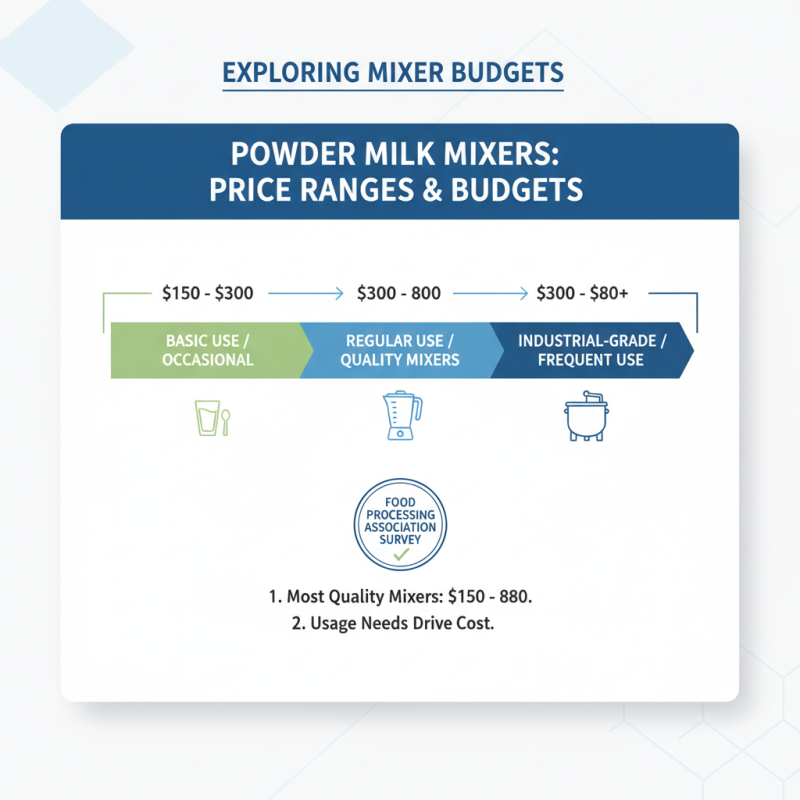
When selecting a powder milk mixer, budget is a crucial factor. A survey by the Food Processing Association indicates that most quality mixers range from $150 to $800. Understanding your usage needs helps in calculating what to spend. Basic mixers might suffice for occasional use, while industrial-grade ones are better for frequent operations.
Consider long-term savings as well. Investing in a more reliable mixer often reduces future costs. A good mixer can serve you for more than ten years, which might justify a higher initial price. However, a recent industry report reveals that 30% of businesses opt for budget models, leading to increased maintenance costs.
Evaluate the features that match your needs. Some mixers offer advanced settings, while others have simpler controls. Selecting the right features can help avoid overspending. At times, users might get caught in the allure of extra functions. Reflecting on your actual needs is vital. It ensures you don’t pay for features that won’t be used.