2026 How to Choose the Best Tablet Presser for Your Needs?
When selecting a tablet presser, understanding your specific needs is crucial. Industry expert Dr. James Carter notes, “A tablet presser should fit the product, not the other way around.” His insight emphasizes the importance of matching equipment to application.
The tablet presser industry offers various models, each designed for different capacities and materials. Many users overlook essential details like pressing force and die size. This oversight can lead to inefficiencies, impacting production. It’s vital to assess not only your current needs but also future demands.
Investing in the right tablet presser is a significant step. Many manufacturers focus solely on price, neglecting quality. This approach may save money initially but result in higher costs later. A thorough evaluation is essential for reliable performance. Balancing affordability and quality can be daunting, yet it is necessary for success.
Understanding Your Needs: Identifying the Right Features for a Tablet Presser
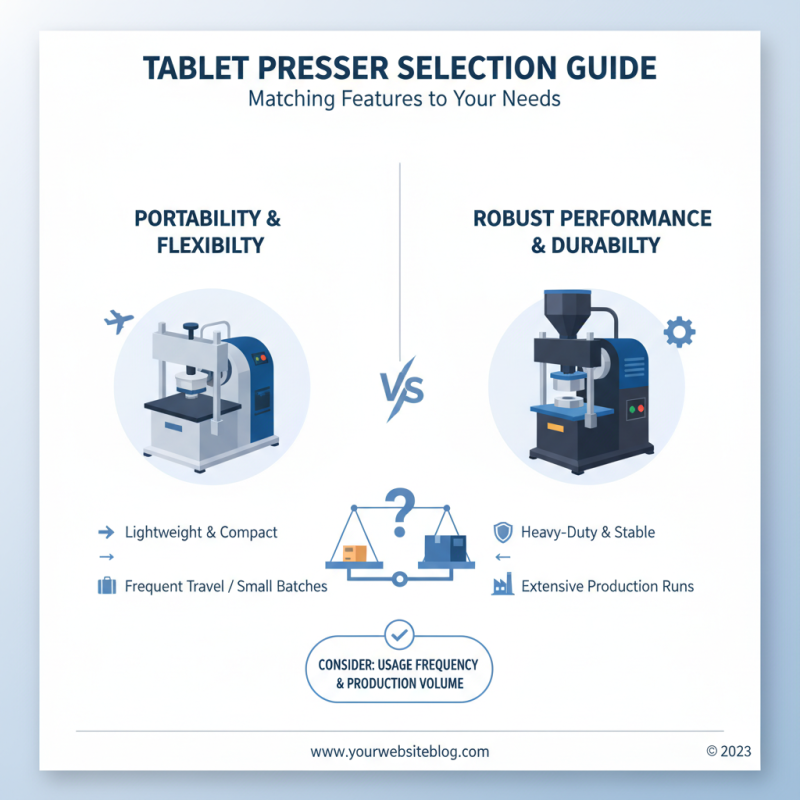
When selecting a tablet presser, understanding your specific needs is crucial. Are you looking for portability or robust performance? A lightweight model may suit those who travel often. However, a heavier, more stable design might be better for extensive production runs. Evaluate how often you’ll use it. Frequent users will benefit from a more durable unit.
The features of a tablet presser can greatly impact your experience. Consider the compression force. It needs to match the materials you plan to use. Variable settings provide flexibility for different tablet sizes and shapes. Pay attention to ease of cleaning. A model with removable parts can save time and prevent contamination.
Don’t overlook the importance of user support and documentation. Reliable manufacturers provide clear instructions and customer service. Researching reviews can reveal insights into the real-world performance of the device. Sometimes, recommendations from experienced users can be more helpful than brand names. Finding the right tablet presser may take time and effort, but the right choice will align with your production goals.
Types of Tablet Pressers: Manual vs. Automatic and Their Applications
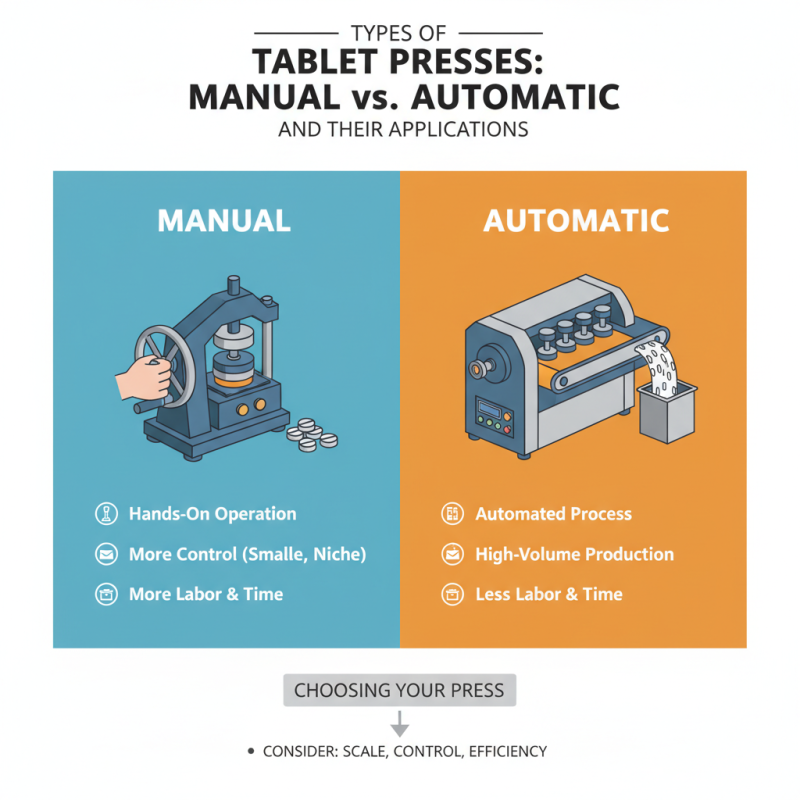
When choosing a tablet presser, understanding the differences between manual and automatic options is crucial. Manual tablet pressers require more hands-on operation. They allow more control over the compression process. This can be beneficial for small-scale production or niche products. However, this method may involve more labor and time commitment.
On the other hand, automatic tablet pressers offer efficiency and consistency. They are designed for high-volume production, significantly speeding up the process. With set parameters, they reduce human error. Nevertheless, automatic systems can be complex. They often require technical knowledge to operate and maintain. Deciding between these types depends on your production needs and expertise.
Consider the scale of your operation. If you're a beginner, a manual presser can be a good start. It allows you to learn the basics without a significant investment. In contrast, an automatic presser will be beneficial for those with established processes. Remember, each type has its drawbacks. Weighing the pros and cons will lead to a more suitable choice for your needs.
Key Factors to Consider: Size, Capacity, and Material Quality
When selecting the ideal tablet presser, size is a crucial factor. A smaller device might be more portable, but it often limits the size of materials you can use. According to a report from the Tablet Press Association, devices under 12 inches are suitable for hobbyists, while larger units are preferred by professional manufacturers. Larger pressers offer increased productivity, especially in batch processing settings.
Capacity matters too. A tablet presser’s capacity dictates how many tablets you can produce at once. High-capacity models can produce up to 100,000 tablets per hour, making them efficient for large-scale operations. However, these machines often come with higher price tags. Operators need to assess their needs and production goals. A recent survey showed that 65% of small businesses opt for mid-capacity models, balancing cost and production efficiency.
Material quality cannot be overlooked. Durable materials enhance the longevity of tablet pressers. High-quality metal components resist wear and tear better than cheaper alternatives. Many professionals suggest investing in devices made with stainless steel or specialized alloys. A significant number of operators reported higher downtime with inferior materials, reflecting common industry challenges. Consider both initial costs and long-term performance.
2026 How to Choose the Best Tablet Presser for Your Needs? - Key Factors to Consider: Size, Capacity, and Material Quality
| Feature |
Description |
| Size |
Tablet presses come in various sizes, typically ranging from small desktop models to large industrial units. Choose based on your workspace and production volume. |
| Capacity |
Consider the maximum amount of material the presser can handle. Capacities range from a few grams for small projects to several tons for commercial use. |
| Material Quality |
The build quality is crucial. Look for durable materials, such as stainless steel or high-grade aluminum, which ensure longevity and safety. |
| User-Friendliness |
Opt for models with intuitive controls and features that enhance usability, including automatic settings and safety mechanisms. |
| Price Range |
Tablet press prices can vary significantly based on features and capacity. Budget accordingly to find the right balance between cost and functionality. |
Evaluating Brand Reputation: Researching Manufacturers and Reviews
When selecting a tablet presser, brand reputation plays a crucial role. Researching manufacturers can help you gauge the quality of their products. Look for brands with a strong history in the industry. Check how long they've been in business and their innovation track record. The experience can often indicate reliability.
Reviews from previous users provide insight into products. Pay attention to both positive and negative feedback. Some may praise a particular feature, while others might highlight flaws. Reading diverse opinions helps you form a balanced view. Don't overlook user comments; they can reveal patterns in product performance.
Consider the manufacturer's customer service as well. A reputable brand should offer support and address concerns promptly. An approachable company enhances your experience with the product. Choosing the right tablet presser requires careful evaluation. Brand reputation, user reviews, and support are vital aspects to consider. Take your time to reflect on your decisions.
Budget Considerations: Balancing Cost with Performance and Quality
When selecting a tablet presser, budget plays a crucial role. It's essential to find a balance between cost, performance, and quality. A well-performing tablet presser does not always mean it is the most expensive. Many affordable models can deliver satisfactory results without compromising quality. However, cheaper units may lack durability or advanced features.
Tips: Explore options that offer a good warranty. This ensures you are protected against defects. Research user reviews to gauge performance. Look for feedback on long-term use to avoid disappointments. Sometimes, high-end features may go unused for casual users.
While it's tempting to go for lower prices, consider the long-term implications. Investing in a mid-range tablet presser can prevent frequent replacements. You might initially save money, but the cost of repairs adds up. A device that functions well can ultimately enhance productivity. Reflect on your needs and choose carefully. Quality tools support your work effectively. Focus on what you truly require, not just what's affordable.