How to Choose the Best Syringe Assembly Machine for Your Needs?
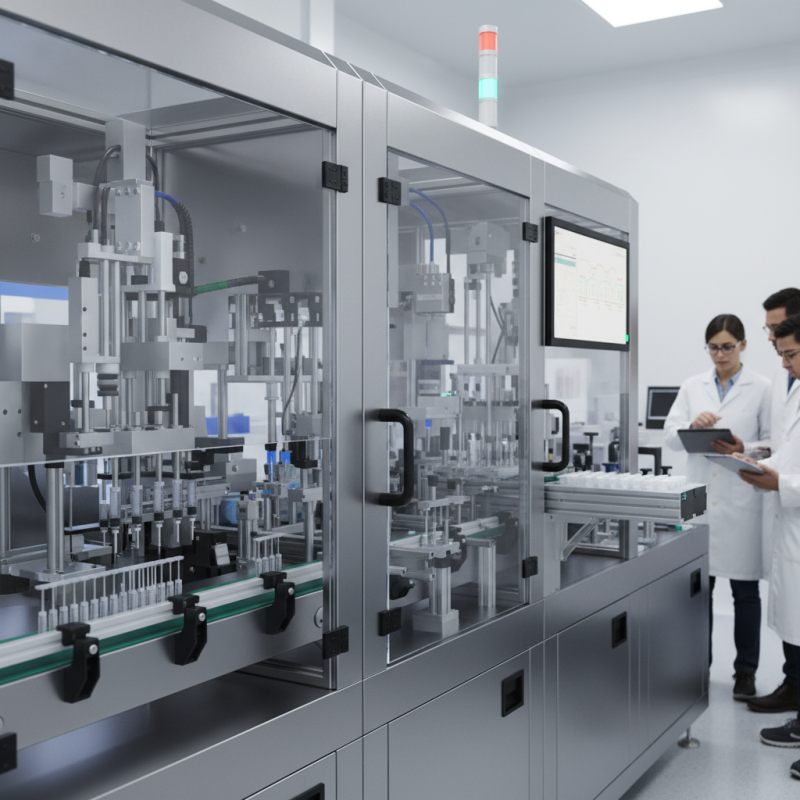
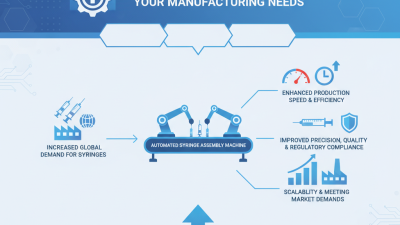
When selecting a Syringe Assembly Machine, understanding your specific needs is crucial. Dr. Emily Chen, an expert in pharmaceutical manufacturing, emphasizes, "The right machine enhances both efficiency and precision." With the rise of automated systems, choosing the best machine can be overwhelming.
Syringe Assembly Machines come in various types. Some are designed for mass production, while others suit smaller batches. Assessing your production volume is vital. Your choice affects not only output but also quality control processes.
Consider the functionality of each machine. Some offer advanced features like automated inspections or easy integration with existing systems. A well-chosen machine can streamline production and reduce errors. However, investing in the wrong model could lead to delays and increased costs. Reflecting on your operational goals is essential for making an informed decision.
Understanding the Different Types of Syringe Assembly Machines
When selecting a syringe assembly machine, understanding the different types is crucial. There are several types, each designed for specific applications. For instance, fully automated machines can produce up to 1,200 syringes per hour, significantly increasing productivity. Semi-automated options often serve smaller operations, providing flexibility and ease of use. According to industry data, over 60% of manufacturers prefer automated systems for high-volume production. However, some may still find value in manual systems for niche products.
Tip: Assess production needs. Determine required output and consider scalability. You want a machine that adapts to your evolving demands.
Another consideration is the technology used in the assembly process. Some machines utilize advanced robotics, ensuring precision assembly. Others may rely on simpler mechanisms that can lead to variability in quality. Studies show that malfunction rates can be minimized by selecting the right technology. Comprehensively reviewing the operational efficiency can guide your choice.
Tip: Always check compatibility with existing systems. Integration can save time and reduce costs.
While many options exist, each choice has trade-offs. Some machines may excel in speed but at the cost of higher maintenance. Others may be easier to maintain but lack advanced features. Understand these dynamics to make an informed decision.
Key Features to Look for in a Syringe Assembly Machine
When selecting a syringe assembly machine, the key features can significantly affect productivity and safety. A machine’s throughput rate is crucial. It determines how many syringes can be assembled in a given time. Efficient machines can increase output significantly, saving time and effort. Additionally, the machine should be user-friendly. An intuitive interface allows operators to adjust settings easily, reducing the likelihood of errors.
Precision is another critical aspect. Accurate filling and assembly guarantees the quality of syringes. Machines equipped with advanced sensors ensure that each step of the process meets stringent standards. Look for options that include calibration features. They help in maintaining consistent performance over time.
Reliability is essential as well. Machines that require frequent repairs will disrupt production and lead to increased costs. Evaluating the build quality and the materials used in the construction can provide insights into durability. Also, consider the level of technical support available. A machine may perform well initially, but ongoing support is vital for long-term operation. Choosing the right syringe assembly machine involves careful consideration of these features.
How to Choose the Best Syringe Assembly Machine for Your Needs? - Key Features to Look for in a Syringe Assembly Machine
| Feature |
Description |
Importance |
Example Consideration |
| Production Speed |
The number of syringes produced per hour. |
Higher speed can increase efficiency and reduce costs. |
Consider machines with 300-600 pieces/hour. |
| Accuracy |
Precision in assembly to ensure no defects. |
Essential for maintaining product quality. |
Look for machines with less than 0.5% error rate. |
| Flexibility |
Ability to produce different syringe types/sizes. |
Adaptable to changing market demands. |
Choose machines that easily interchange parts. |
| Ease of Use |
User-friendly interface and controls. |
Reduces training time and operator errors. |
Opt for intuitive touch screen controls. |
| Maintenance Requirements |
Frequency and ease of maintenance. |
Lower downtime and operational cost. |
Select machines with simple maintenance protocols. |
| Safety Features |
Built-in safety mechanisms to protect operators. |
Critical for compliance and worker safety. |
Look for emergency stops and guards. |
Assessing Production Capacity and Speed Requirements
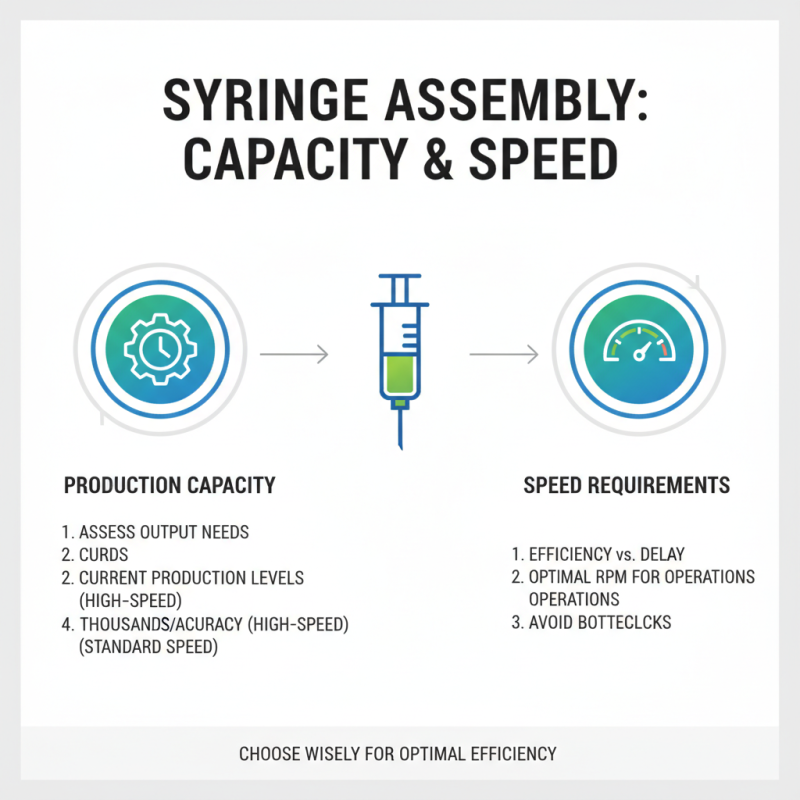
When selecting a syringe assembly machine, assessing production capacity and speed is vital. Understanding your specific output needs can make the difference between efficiency and delay. High-speed machines can produce thousands of units per hour, while others may focus on accuracy and precision. A careful assessment of current production levels helps determine the ideal speed for your operations.
Consider the volume of production you anticipate. If your demand fluctuates, opt for a machine with adjustable speed settings. This flexibility allows for scaling up during peak times or reducing output during slower periods. However, beware of overestimating needs. An overly ambitious machine could lead to waste or mechanical issues.
Maintenance is another aspect that ties back to speed. Machines that run too fast may require frequent upkeep, leading to downtime. Reflect on your team's capacity to handle maintenance efficiently, as this can affect overall productivity. Balancing speed with reliability takes time and experience. Each decision contributes to a production line's success or failure. Consider all factors before settling on a solution.
Evaluating Cost vs. Quality in Syringe Assembly Machines
When evaluating syringe assembly machines, cost and quality often collide. Investing in a lower-cost machine can seem appealing. However, it is crucial to consider long-term reliability. A study by the International Society for Pharmaceutical Engineering indicates that a reliable assembly machine can reduce operational costs by up to 30% over five years. This data suggests that upfront savings might lead to additional costs down the line.
Quality also correlates with compliance. Regulatory bodies, such as the FDA, require stringent quality assurance measures. A machine that compromises on quality can result in non-compliance, leading to expensive recalls. This risk can ultimately outweigh the initial cost savings. An analysis from MarketsandMarkets reveals that the global syringe market is projected to reach $8.7 billion by 2026, emphasizing the need for high-quality machinery in a booming market.
Tips: Look for machines with high-quality certification. Establish a budget but weigh potential maintenance costs. Remember, investing in quality equipment can pay dividends in efficiency and compliance. Avoid machines that cut corners; they may lead to future challenges. Don't overlook the importance of warranties and technical support. These factors can greatly influence your return on investment.
Importance of After-Sales Support and Maintenance Options
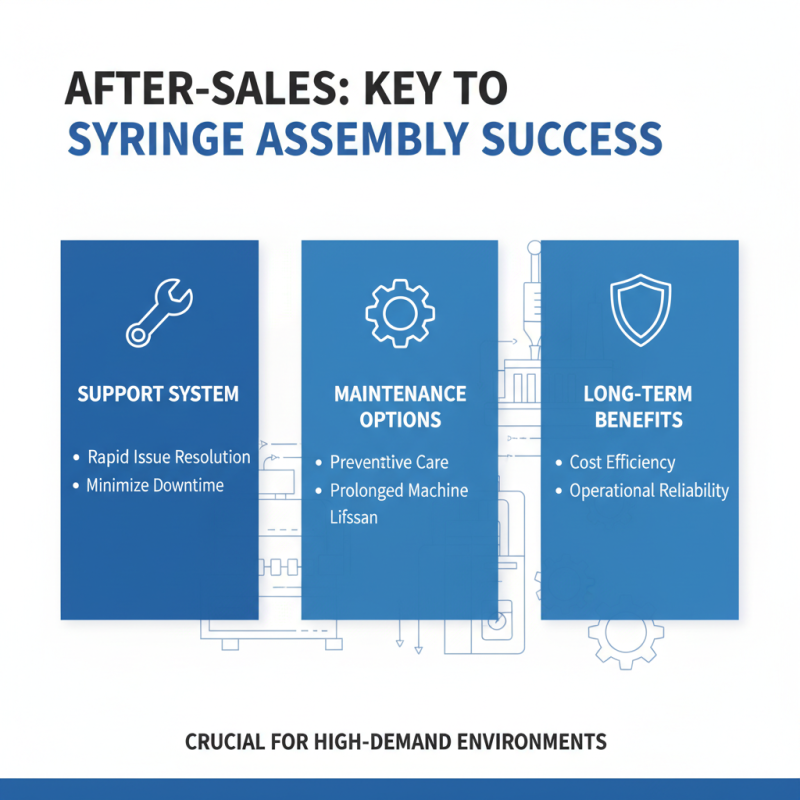
When selecting a syringe assembly machine, after-sales support and maintenance options are often overlooked. However, these elements are crucial for long-term success. A reliable support system ensures that you can quickly resolve any operational issues. Downtime can be costly, especially in high-demand environments.
Consider what maintenance packages are available. Some companies offer proactive services that include regular check-ups. This can extend the life of the machine and maintain efficiency. A trusted partner will have trained technicians ready to assist. They should also provide accessible troubleshooting resources.
Evaluate the service response time. In urgent situations, this could make a big difference. A prompt response helps minimize interruptions. After all, a machine is only as good as the support behind it. Investing in a machine with strong after-sales support could save you from future frustrations.