What is a Powder Mixer and How Does it Work?
In the world of industrial processing, Powder Mixers play a vital role. These machines ensure consistent blending of various powders, making them essential in industries like food, pharmaceuticals, and cosmetics. Efficient mixing can be complex. Factors such as powder characteristics and desired mix quality greatly influence the choice of equipment.
Powder Mixers operate on different principles, often utilizing gravity, rotation, or both. They vary in design and functionality, catering to specific mixing needs. Understanding how these machines work helps companies optimize their production processes. Reliability is key, especially in high-stakes industries. A poorly mixed batch can lead to subpar products and significant losses.
As companies seek efficiency, the demand for advanced Powder Mixers rises. However, even the most sophisticated machinery must be operated correctly. Improper use can undermine efficiency and product quality. Analyzing performance and addressing shortcomings is crucial. Embracing best practices can improve outcomes.
What is a Powder Mixer?
A powder mixer is a crucial piece of equipment in various industries. It blends dry powders to achieve a homogenous mixture. This process is vital in pharmaceutical, food, and chemical sectors, where consistency can determine product quality. According to a recent industry report, the global powder mixing equipment market was valued at approximately $3 billion in 2022 and is expected to grow steadily.
Mixing principles rely on uniform distribution and particle interactions. The equipment can operate on different scales, from small batches to large-scale production. Its efficiency depends on factors such as mixer type, speed, and mixing time. For some applications, under-mixing can lead to inconsistent products, whereas over-mixing can cause clumping.
Tips: Always calibrate your powder mixer according to your specific materials. Different powders behave uniquely, requiring tailored mixing approaches. Regular maintenance is another aspect often overlooked. A poorly maintained mixer may not perform optimally and can compromise product quality. Understanding these nuances can enhance operation and end-product reliability.
Different Types of Powder Mixers and Their Applications
Powder mixers come in various types, each designed for specific applications. Ribbon blenders are popular in food processing and pharmaceuticals. They mix powders uniformly, ensuring consistency. Research shows that these mixers can reduce mixing time by up to 50%. This efficiency makes them invaluable in large-scale production.
Another type is the paddle mixer. These mixers excel in handling fragile materials. Their gentle mixing action preserves the integrity of the powders. Reports indicate that paddle mixers can achieve homogeneous blends with particle size variations of less than 5%. This capability is critical in industries like cosmetics.
Vibratory mixers offer unique advantages. They use vibration to achieve quick and efficient blending. This method is particularly effective for sticky powders or those that require moisture control. However, the risk of segregation can occur if not managed properly. Each type of mixer has its strengths and weaknesses, presenting opportunities for improvement in design and application.
What is a Powder Mixer and How Does it Work? - Different Types of Powder Mixers and Their Applications
| Type of Powder Mixer |
Working Principle |
Applications |
Advantages |
| V-Blender |
Uses a V-shaped container for mixing powders through gravity. |
Pharmaceuticals, food products, chemicals. |
Gentle mixing, reduced segregation, suitable for fragile materials. |
| Ribbon Blender |
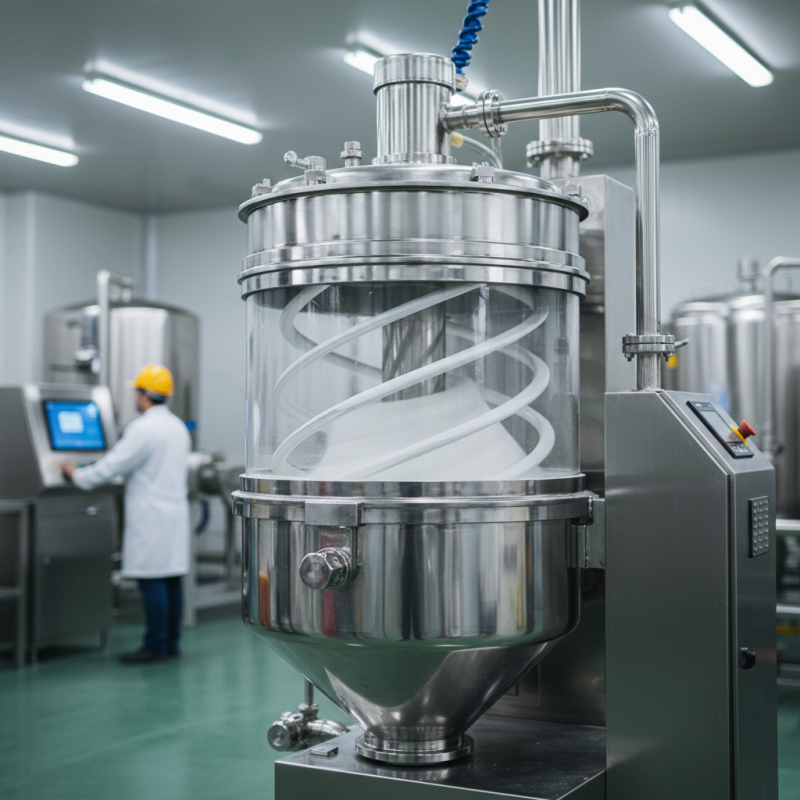
Features a helical ribbon that moves material from end to end for thorough mixing. |
Food processing, plastics, cosmetics. |
High mixing efficiency, ideal for bulk materials. |
| Double Cone Blender |
Utilizes a double-cone shaped container for gentle and effective mixing. |
Pharmaceuticals, food ingredients, powdered soaps. |
Uniform mixing and easy cleanup. |
| Fluidized Bed Mixer |
Uses air to fluidize powders for homogeneous mixing and granulation. |
Pharmaceuticals, fertilizers, and food additives. |
Efficient mixing and coating capability. |
| Tumble Mixer |
Rotates in a fixed axis to combine materials through gravitational flow. |
Cosmetics, spices, bulk powders. |
Low cost, versatile, suitable for small batches. |
How Powder Mixers Function: Mechanisms and Processes
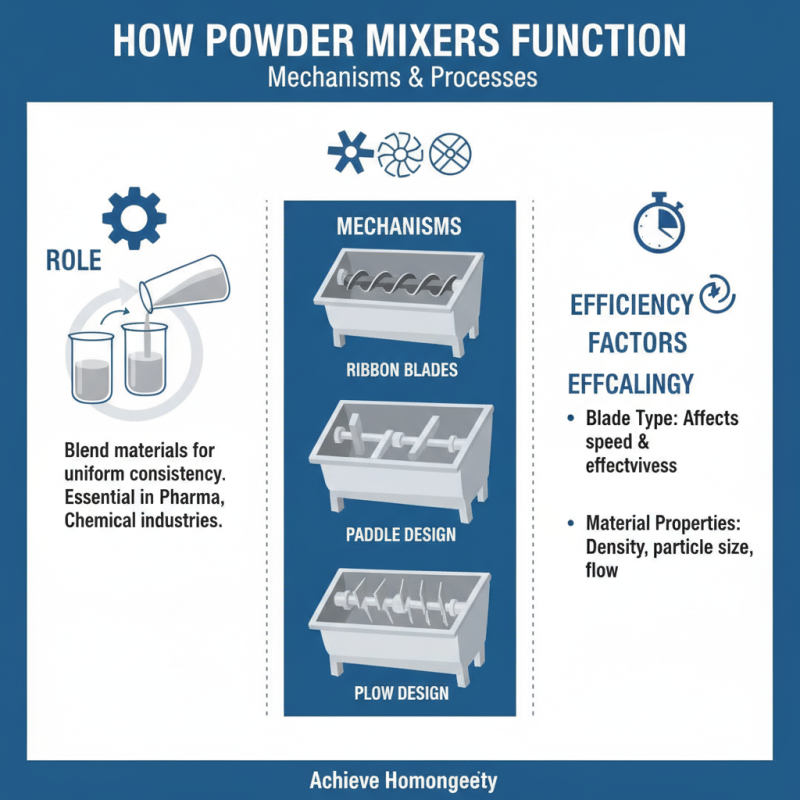
Powder mixers are essential equipment in many industries, including food, pharmaceuticals, and chemicals. They facilitate the blending of various powder materials to achieve uniform consistency. The efficiency of a powder mixer relies on its mechanisms, which can vary widely. For instance, some mixers utilize ribbon blades, while others employ paddle or plow designs. These components affect the speed and effectiveness of the mixing process.
According to a report by Grand View Research, the global market for powder mixing equipment is expected to reach USD 4.3 billion by 2025, growing at a CAGR of 5.1%. This growth suggests that many companies are prioritizing the optimization of their mixing processes. Properly designed mixers ensure that powders are evenly distributed, which is crucial for product quality. However, achieving optimal blending can sometimes be challenging, especially with materials of differing densities and flow characteristics.
The mixing process involves the interaction between the powders and the equipment's mechanical action. Inadequate mixing can lead to consistency issues, which might result in product recalls or quality complaints. Understanding the nuances of powder flow and behavior is vital. Many mixers also come with features like adjustable speeds and timed cycles. These can enhance the mixing outcome, but they require careful calibration and regular maintenance to function effectively.
Key Features to Consider When Choosing a Powder Mixer
When selecting a powder mixer, you must consider several key features.
The mixer’s size is crucial. A smaller model may fit tight spaces but could limit batch sizes.
Larger mixers provide flexibility but require more room. Assess your operational needs.
Another important feature is the mixing capacity.
Different industries utilize various powder densities, which directly affect the mixer performance.
A good mixer must accommodate the specific materials you intend to use. Ensure it can blend efficiently, producing uniform results across batches.
The type of mixing mechanism is also vital. Some mixers use a ribbon or paddle design,
while others may employ a more complex system. Evaluating these mechanisms based on your powder's characteristics can help in achieving optimal results.
Remember, choosing the right mixer isn’t always straightforward.
It's about balancing multiple factors. As you reflect on your choices, consider the specific needs of your operations thoroughly.
Maintenance Tips for Ensuring Optimal Performance of Powder Mixers
Powder mixers are crucial in various industries. Keeping them in top shape is vital for optimal performance. Regular maintenance saves time and money. Ignoring it can lead to inefficient mixing and costly repairs.
One key tip is to clean the mixer thoroughly after each use. Residual powder can accumulate and affect future batches. Choose a suitable cleaning solution. Pay attention to hard-to-reach areas. This can prevent contamination and ensure consistent results.
Additionally, check all parts regularly. Inspect seals and bearings for wear. Replace them if needed. This step reduces the risk of malfunctions. Invest time in monitoring equipment performance. Identify issues early to avoid larger problems later. Remember, a well-maintained mixer leads to improved product quality.