Blog
What is a Powder Mixture Machine and How Does It Work?
A Powder Mixture Machine is an essential device in various industries. Its primary function is to blend powdered materials uniformly. These machines are used in food production, pharmaceuticals, and construction.
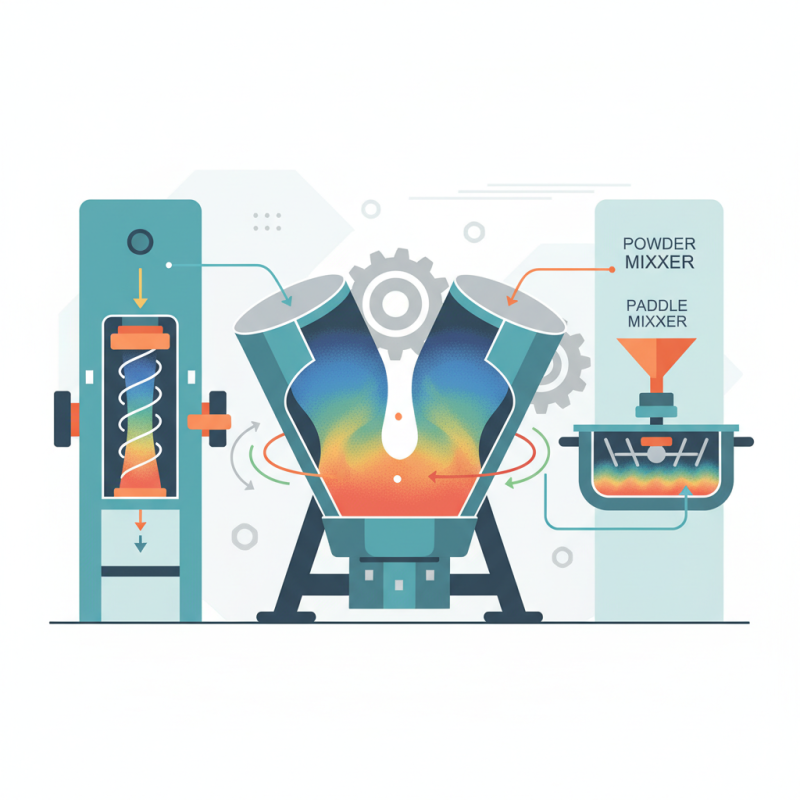
Understanding how a Powder Mixture Machine operates is crucial. Typically, it combines different powders to ensure a consistent blend. The mixing process can involve various mechanisms, such as ribbon, paddle, or V-shaped mixers. Each type has its unique design and mixing efficiency. However, achieving a perfect blend can sometimes be challenging.
Equipment performance can vary greatly. Issues may arise with incorrect settings or material characteristics. Users often face the difficulty of maintaining consistent quality. Reflection on these challenges is essential for improvement. The importance of a well-calibrated Powder Mixture Machine cannot be overstated. It ensures product quality and operational efficiency in multiple sectors.
What is a Powder Mixture Machine?
A powder mixture machine is a device designed to blend powders thoroughly and efficiently. It plays a crucial role in various industries, including food, pharmaceuticals, and chemicals. These machines come in various sizes and designs, catering to different production needs. Typically, they feature a mixing chamber where powders are combined. This chamber can be equipped with paddles or blades to enhance the mixing process.
The mixing process can be complex. Different materials may have distinct densities and flow characteristics. Achieving a homogeneous mixture requires careful consideration of these factors. Sometimes, powders can clump together, making it difficult to achieve uniformity. Manufacturers often need to experiment with the mixing time and speed to find the right combination. This trial-and-error approach can be time-consuming but essential for high-quality results.
Moreover, operator training is critical. Users must understand how to load powders correctly and monitor the mixing process. Mistakes in loading can lead to inconsistent blends. Regular maintenance of the machine is also necessary to avoid malfunctions. These factors highlight the challenges in operating a powder mixture machine effectively. Balancing efficiency and quality in the mixing process is an ongoing pursuit for many manufacturers.
Powder Mixture Machine Performance Overview
This bar chart illustrates the performance metrics of a Powder Mixture Machine, including speed, capacity, power consumption, and operational cost. This data highlights the efficiency and effectiveness of the machine in industrial applications.
Key Components of a Powder Mixture Machine
A powder mixture machine is crucial in various industries. Its main components include a mixing chamber, mechanical drives, and control systems. The mixing chamber blends different powders to achieve uniform consistency. This chamber must accommodate varying powder densities and particle sizes.
Mechanical drives are vital for efficient operation. They create motion needed to mix powders thoroughly. According to a recent industry report, advancements in drive technology can improve mixing efficiency by 30%. A poorly designed drive can lead to uneven mixtures, affecting product quality.
Control systems ensure precise operation. They monitor temperature, humidity, and mixing time. Some machines feature automated controls. These can enhance accuracy but may require fine-tuning. A reliance on automation can lead to oversights if operators do not maintain vigilance. Proper maintenance is essential for optimal performance. Inadequate maintenance can result in operational issues and reduce the machine's lifespan.
The Working Principle of a Powder Mixture Machine
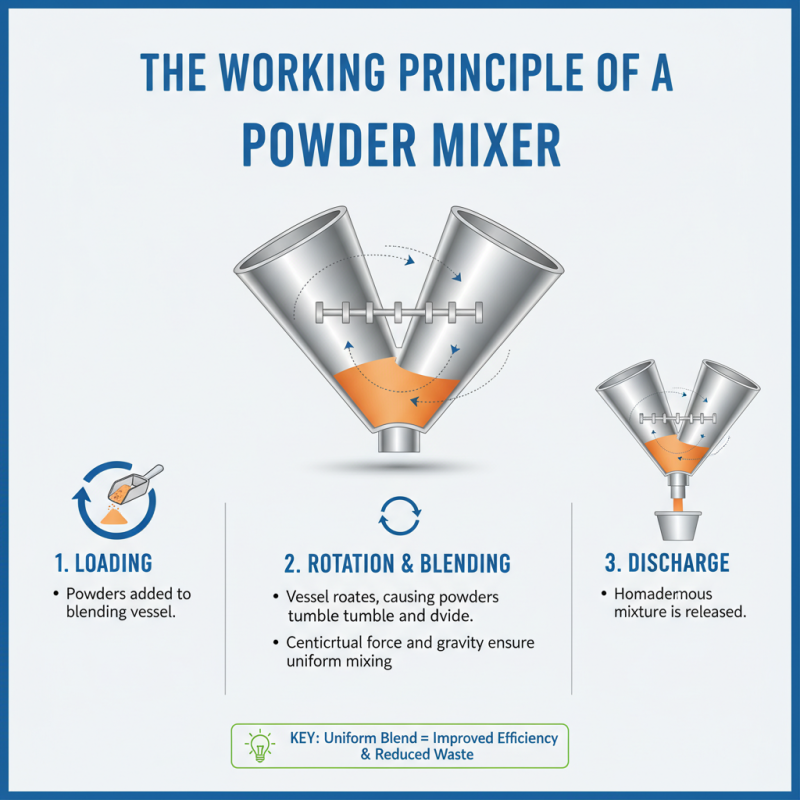
A powder mixture machine plays a crucial role in various industries. Its primary function is to blend powdered materials uniformly. Understanding its working principle can enhance its efficiency and reduce waste.
The machine operates on a simple yet effective principle. It utilizes a rotating drum or a mixing chamber equipped with blades or paddles. These components agitate the powders, allowing them to mix thoroughly. This method ensures a consistent blend. According to industry reports, improper mixing can lead to up to 30% product waste, highlighting the importance of an effective mixing process.
Tips: Regularly calibrate your equipment to maintain mixing accuracy. Overloaded machines might struggle and underperform. Monitor the mixing time; excessive agitation can lead to degradation of fragile powders.
Mixing efficiency can be hampered by incorrect particle size distributions. If the powder particles differ significantly in size, it can result in uneven mixtures. It’s essential to understand your materials fully. Testing small batches before mass production can save time and resources.
Applications of Powder Mixture Machines in Various Industries
Powder mixture machines play a vital role in many industries. They are essential in pharmaceuticals, food processing, and materials manufacturing. These machines blend powders uniformly. This ensures consistency in quality and performance. In pharmaceuticals, accurate mixing is critical for drug efficacy. A small variance can change a product’s effectiveness significantly.
In food processing, these machines mix ingredients like spices, flour, and sugar. An even mix enhances flavor and quality. The construction industry also benefits. Cement and other powdered materials need precise mixtures for optimal strength. Each application requires attention to detail, making quality control inseparable from machine operation.
Tip: Always conduct a small batch test before large scale mixing. This ensures everyone is satisfied with the blend. Remember, not every machine suits every mix. Some may not achieve the needed uniformity. Frequent maintenance helps avoid such issues. Inspecting and cleaning machines regularly can prolong their lifespan.
Maintenance and Care for Powder Mixture Machines
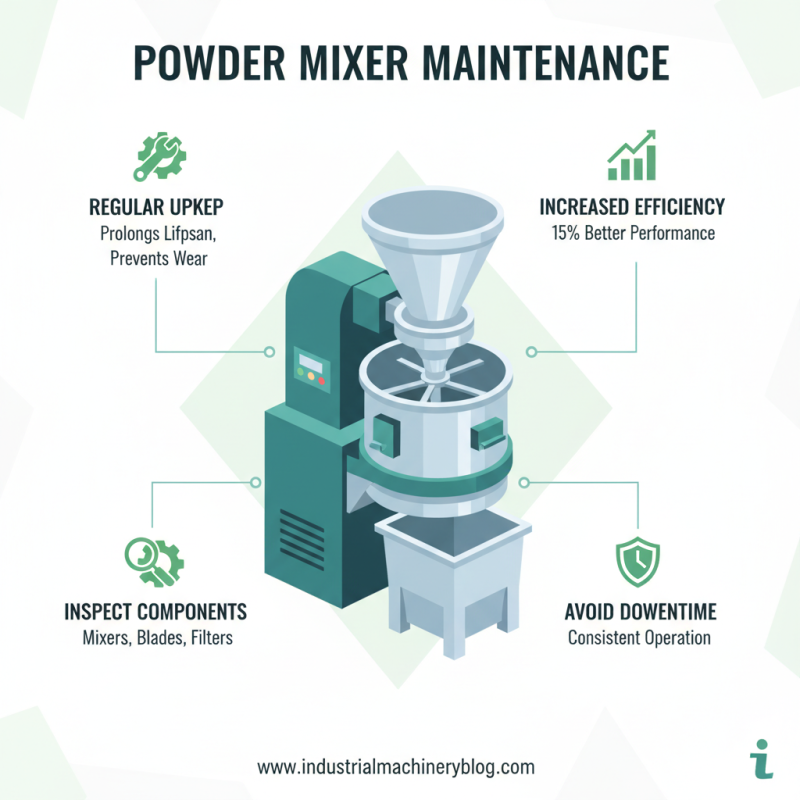
Maintaining a powder mixture machine is crucial for efficient operation. Regular upkeep can prolong the lifespan of the equipment. Reports suggest that a well-maintained machine can operate at a 15% higher efficiency. Operational wear and tear can lead to decreased performance. Inspecting components like mixers, blades, and filters regularly is essential.
Cleaning is another critical aspect of maintenance. Residues can cause contamination in mixtures. Industry standards recommend cleaning after every use. Neglecting this can lead to costly downtimes. Inadequate cleaning may also result in product rejections. It is alarming that around 20% of operational failures stem from poor cleaning practices.
Monitoring vibrations and sounds can indicate potential issues. An unusual noise may mean a mechanical failure is imminent. Data shows that early detection of problems can reduce repair costs by up to 25%. Operators should log these observations for further analysis. Ignoring small signs often leads to bigger, more expensive issues. Implementing a proactive maintenance schedule is crucial for operational success.
Related Posts
-
What Is a Powder Mixture Machine and How Does It Revolutionize Material Processing?
-
Best Mesin Mixer Powder for Efficient Mixing Techniques?
-
How to Choose the Best Powder Mixture Machine for Your Needs?
-
Top 10 Benefits of Using a Powder Mixture Machine in Manufacturing
-
Why Investing in a Mesin Mixer Powder is Essential for Your Production Efficiency
-
Why Every Parent Needs a Powder Milk Mixer for Hassle-Free Feeding