Leave Your Message
Blog

Blog

Why Choose a Natoli Tablet Press for Global Production?

Choosing the right tablet press can shape production quality, efficiency, and long-term reliability. A Natoli Tablet Press offers a practical foundation for manufacturers serving multiple markets. Its design supports controlled compression, consistent tablet weight, and repeatable output across different product requirements. These details matter when production teams manage several formulations, tooling sets, and batch sizes.

Experience becomes visible on the factory floor. Operators need clear controls, accessible change parts, and straightforward cleaning procedures. Engineers also need dependable data for setup, troubleshooting, and process validation. Natoli’s equipment is supported by technical expertise, tooling knowledge, training, and service resources. These capabilities can help manufacturers build stronger operating procedures and respond to production changes with greater confidence. They do not replace careful validation.

Global production requires more than a machine shipped overseas. It requires documentation, operator support, spare-parts planning, and attention to regional quality expectations. A well-prepared team should confirm the press configuration, electrical specifications, safety features, and available service coverage before purchase. Small oversights can become expensive later.

No tablet press removes every production challenge. That point deserves attention. Performance still depends on formulation behavior, tooling condition, maintenance discipline, and trained personnel. A Natoli Tablet Press can provide a reliable platform, but results come from the complete system around it. When equipment capability matches practical manufacturing needs, companies can improve consistency while preparing for responsible, scalable growth.
Why Choose a Natoli Tablet Press for Global Production?

Natoli Tablet Presses: Overview and Core Manufacturing Principles

A tablet press converts a measured powder blend into compact, repeatable tablets. Its core parts include the die table, punches, feed system, and compression rollers. Each component affects weight, hardness, thickness, and appearance. Small changes can matter.

Modern presses use controlled filling, pre-compression, and main compression. The feed system guides powder into each die cavity. Lower punches set the fill depth. Upper and lower rollers then apply force through a measured cycle. Sensors monitor pressure, speed, and tablet weight during production. Operators can adjust settings before defects spread across a batch.

Reliable manufacturing begins with robust materials and precise machining. Hardened tooling resists wear, while smooth product-contact surfaces reduce powder buildup. Good alignment also protects punches and dies from uneven stress. Routine cleaning, lubrication, and inspection support stable performance. These tasks sound ordinary. They prevent expensive surprises.

Experienced teams validate critical settings with representative formulations. They check flow, moisture, compression force, and ejection behavior. A press may perform well in one room but struggle after humidity changes. That assumption can fail. Even automated controls need trained operators and documented checks. In practice, production records often reveal issues that a display screen misses. No press is perfect. Reflection matters when improving a process.

Key Features Supporting Reliable Global Tablet Production

Reliable global tablet production begins with repeatable machine behavior. A robust tablet press should hold compression force, fill depth, and turret speed within controlled ranges. These controls help operators maintain tablet weight, hardness, and thickness across long runs. Clear HMI screens reduce training differences between facilities. Recipe management also limits manual entry errors during product changeovers. Small details matter. Guarded access, tool-free adjustments, and visible lubrication points can shorten routine interventions.

A suitable press must support documented qualification and ongoing process verification. Digital records should capture critical settings, alarms, batch data, and operator actions. This evidence helps quality teams investigate process drift instead of relying on memory. Interchangeable tooling and standardized parts simplify support across regions. Local technicians can work from common drawings, maintenance intervals, and calibration procedures. Remote diagnostics may reduce downtime, but secure access and defined responsibilities remain essential. Speed alone is not enough.

In practice, dust control, gentle product handling, and stable feeding influence daily performance. A well-designed feed system should prevent segregation while keeping the die table supplied evenly. Compression stations need consistent force measurement when materials vary between suppliers. Cleaning access also deserves close review; hidden powder buildup can create avoidable faults. No press is completely maintenance-free. Teams may underestimate setup time or trust a default recipe too quickly. Trials with representative materials, realistic shift patterns, and trained operators reveal those weaknesses before wider deployment. That is where reliable production is actually tested.

Why Choose a Natoli Tablet Press for Global Production?

Key Features Supporting Reliable Global Tablet Production

The chart shows calculated single-layer tablet output across representative production configurations. Output is based on turret stations × operating speed × 60 minutes, helping manufacturers compare scalable capacity, production flexibility, and suitability for different global markets without relying on brand-specific performance claims.

How Natoli Presses Adapt to Different Products and Markets

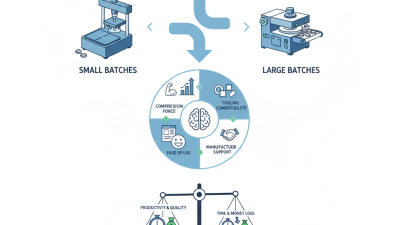
A tablet press for global production must handle more than different tablet shapes. It must adapt to powders, markets, regulations, and operator skills. High-speed production may require precise force control, while small regional batches often need rapid tooling changes. A practical press supports both demands without making cleaning feel like a daily engineering project.

Product behavior changes quickly. Direct-compression blends may flow well, but moisture-sensitive formulations can challenge feeding and tablet strength. Adjustable feeders, controlled pre-compression, and real-time weight monitoring help manage these differences. The FDA’s Process Validation guidance emphasizes continued process verification, not one-time approval. This matters across markets. The World Health Organization has reported that about 10% of medicines in low- and middle-income countries may be substandard or falsified, reinforcing the need for dependable controls. Still, equipment alone cannot guarantee quality.

Tips: Match the press to the formulation first. Then test tooling, feeder performance, cleaning time, and data capture under realistic conditions. Review local requirements before shipment. ISPE’s Pharma 4.0 guidance highlights connected data and process knowledge, but connectivity can create new weaknesses when staff lack training. A dashboard may show stable output while a worn punch quietly changes tablet appearance. That is easy to miss. Build inspection into routine production, and question specifications that look complete but have never faced a difficult product.

Quality, Compliance, and Validation Across International Operations

Why Choose a Tablet Press for Global Production?

Quality, compliance, and validation determine whether a tablet press performs consistently across countries. A robust system should control compression force, tablet weight, turret speed, and feeder flow with clear, reviewable records. WHO estimates that one in ten medical products in low- and middle-income countries fails quality standards. This makes process control more than an efficiency target (WHO, Substandard and Falsified Medical Products report).

Global operations also require evidence that equipment performs as designed. Installation qualification, operational qualification, and performance qualification should connect directly with local GMP expectations, including EU GMP Annex 15, PIC/S guidance, and 21 CFR Part 211. Audit trails, electronic records, and ALCOA+ data principles support reliable batch decisions. However, validation is not a one-time certificate. Different humidity, operators, tooling, and raw-material behavior can expose weaknesses after transfer. That possibility deserves honest review.

Tips: Define critical process parameters before purchase. Test several formulations, not only an easy powder. Confirm cleaning access around the feeder and compression zone. Ask for calibration records, change-control procedures, and software documentation. A short site acceptance test can reveal more than polished demonstrations. Record the uncomfortable findings. They often prevent expensive rework.

Service, Training, and Lifecycle Support for Global Manufacturers

For global tablet production, equipment performance depends on more than press speed and output. Reliable service begins with clear installation plans, documented checks, and technicians who understand regional operating conditions. A support team should help verify compression settings, tooling alignment, feeder performance, and dust-control routines before production starts.

Practical training makes that support useful. Operators can learn through guided setup, supervised changeovers, and fault simulations on the shop floor. A short session beside the press often teaches more than a thick manual. Training should cover cleaning, inspection points, safe adjustments, and basic data review. It should also respect local language, experience levels, and shift patterns.

Lifecycle support matters when a press has run for years. Scheduled maintenance, spare-parts planning, software updates, and remote troubleshooting can reduce avoidable downtime. Service records should show what changed, who approved it, and when the next inspection is due. No support program is flawless. Response times may vary across regions, and training can lose value when experienced operators leave. Manufacturers should review those gaps honestly, refresh skills regularly, and measure support performance with practical evidence. Small details matter. A clean handover today can prevent a costly production pause months later.

Why Choose a Natoli Tablet Press for Global Production? - Service, Training, and Lifecycle Support for Global Manufacturers

Support Dimension Global Production Requirement Relevant Support Practice Typical Deliverables or Evidence Lifecycle Value
Installation and Commissioning Consistent equipment start-up across different sites, utilities, and operating environments Site-readiness review, installation guidance, utility verification, and commissioning support Installation records, commissioning checklists, punch lists, and handover documentation Reduces start-up uncertainty and supports a controlled transition into production
Factory and Site Acceptance Objective confirmation that the press meets agreed technical and performance requirements Documented FAT and SAT protocols covering functions, controls, safety, and agreed process conditions Approved test protocols, results, deviation logs, and acceptance signatures Creates traceable acceptance criteria for engineering, quality, and production teams
Qualification Support Compliance with regulated pharmaceutical manufacturing processes Support for IQ, OQ, and applicable PQ activities within the customer’s validation system Qualification protocols, calibration records, risk assessments, and controlled documentation Improves audit readiness and helps establish documented process control
Operator Training Safe, repeatable operation across shifts, plants, and experience levels Role-based instruction covering operation, setup, tooling, cleaning, safety, and basic troubleshooting Training agendas, attendance records, competency checks, and standard operating procedures Promotes consistent practices and reduces operator-related errors
Maintenance Training Reliable in-house maintenance capability and faster fault isolation Instruction on lubrication, wear components, sensors, adjustments, inspections, and preventive tasks Maintenance schedules, inspection criteria, service procedures, and troubleshooting guides Supports higher equipment availability and more predictable maintenance planning
Remote Technical Assistance Rapid access to qualified support when production issues occur across time zones Structured troubleshooting using machine data, fault descriptions, photographs, and service records Case records, diagnostic instructions, corrective-action notes, and escalation paths Can reduce unnecessary travel and shorten the time required to identify problems
Preventive Maintenance Early detection of wear, misalignment, lubrication issues, and component degradation Maintenance intervals based on operating conditions, usage, inspection findings, and manufacturer recommendations Service calendars, inspection forms, lubrication records, and replacement recommendations Helps prevent avoidable downtime and protects long-term machine performance
Spare Parts Planning Availability of critical components for plants operating far from central technical teams Criticality assessment, recommended stock levels, parts identification, and replenishment planning Parts lists, equipment-specific bills of material, reorder points, and service kits Improves maintenance preparedness and reduces delays caused by unavailable components
Tooling and Format Changeover Repeatable tablet quality when products, tooling sets, or batch sizes change Tooling setup guidance, changeover procedures, inspection practices, and parameter documentation Setup sheets, tooling inspection records, changeover checklists, and approved process parameters Supports faster, more consistent transitions between products
Documentation and Traceability Controlled information for regulated production, quality investigations, and audits Document management covering manuals, drawings, revisions, service history, and change control Equipment files, revision histories, service reports, certificates, and controlled work instructions Strengthens knowledge continuity across sites, teams, and equipment generations
Safety and Compliance Protection of personnel and alignment with applicable local and international requirements Safety risk review, guarding verification, emergency-stop checks, and documented operating procedures Risk assessments, safety checklists, operating instructions, and corrective-action records Reduces operational risk and supports responsible equipment governance
Modernization and Lifecycle Upgrades Long-term productivity, maintainability, and compatibility as production requirements evolve Assessment of controls, sensors, software, safety systems, wear parts, and process requirements Upgrade proposals, compatibility reviews, implementation plans, and post-upgrade verification Extends useful equipment life and may reduce the need for premature replacement