How to Choose a Syringe Assembly Machine?
Choosing a Syringe Assembly Machine is a production decision, not merely an equipment purchase. According to the World Health Organization, approximately 16 billion injections are administered worldwide each year. This volume increases pressure on manufacturers to improve assembly speed, consistency, traceability, and operator safety. A machine that looks efficient during a demonstration may still struggle with needle alignment, barrel feeding, or unstable adhesive curing.
Industry data also shows why this decision deserves careful analysis. Grand View Research’s 2024 Prefilled Syringes Market report identifies continued growth in prefilled syringe demand, supported by biologics, vaccination programs, and home-based treatment. Growing demand does not automatically justify the fastest machine. It may require higher flexibility instead. A line producing 300 units per minute can appear impressive, yet frequent format changes may reduce its real output.
The right Syringe Assembly Machine should match the product, process, and quality system. Buyers should examine feeding accuracy, assembly force control, vision inspection, reject handling, cleanroom compatibility, and electronic batch records. ISO 13485 principles also make validation, documentation, and risk management central purchasing criteria. Ask for factory acceptance testing data, not only promotional videos. Check performance with your actual syringe, needle, and packaging materials.
Small details matter. A loose nest can create repeated alignment faults. Poor access can turn routine cleaning into lost production hours. No machine is perfect. That reality should encourage practical trials, transparent supplier discussions, and careful total-cost analysis before approval.
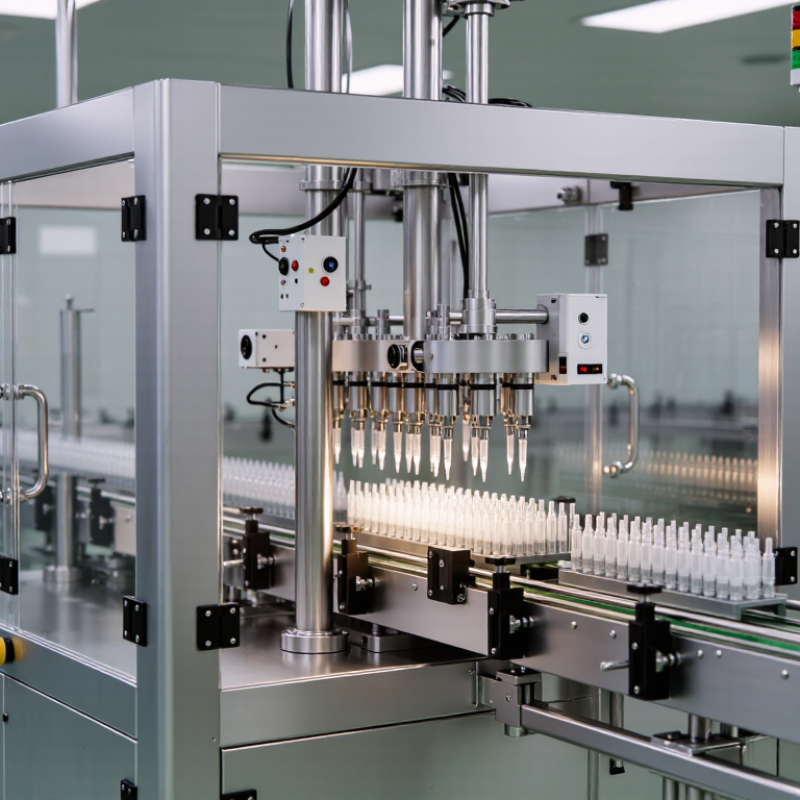
Define the Syringe Assembly Process and Production Requirements
How to Choose a Syringe Assembly Machine?
Define the Syringe Assembly Process and Production Requirements
Start by mapping every assembly step before comparing machines. List component feeding, orientation, insertion, pressing, inspection, and final handling. Include the syringe barrel, plunger, gasket, needle, and protective parts. Each component may require different contact pressure and alignment accuracy. Small variations can cause leaks, misalignment, or rejected units.
Measure the real production target, not only the advertised output. Record required units per hour, operating shifts, batch sizes, and acceptable reject rates. Consider changeover time between syringe formats.
It matters. A machine running quickly may lose efficiency during cleaning, adjustment, or material replenishment. Define the available floor space, operator access, cleanroom conditions, and utility supply before requesting quotations.
Quality requirements must be measurable and documented. Specify force limits, dimensional tolerances, vision checks, leak tests, and traceability records.
Ask how the machine supports process validation, calibration, preventive maintenance, and controlled software access.
In practical trials, use actual production components rather than sample parts alone. We once underestimated gasket variation; the assembly looked stable, but rejection rates increased later.
That mistake showed why tolerance studies and extended testing are necessary.
Leave room for improvement, because the first process design is rarely perfect.
Identify Machine Types and Key Compatibility Factors
Choosing a syringe assembly machine starts with the syringe, not the machine. The World Health Organization estimates that about 16 billion injections occur worldwide each year. This scale makes repeatable assembly essential. Review whether you need manual-assist, semi-automatic, or fully automatic equipment. Semi-automatic systems suit varied batches and frequent format changes. Fully automatic lines deliver higher output, but they demand stable component supply and stronger validation controls.
Compatibility needs careful testing. Check barrel diameter, flange shape, plunger design, gasket material, needle dimensions, and luer connection. Glass and polymer barrels may require different feeding, gripping, and inspection methods. The machine should support the required nesting format and cleanroom conditions. ISO 11040 specifications can guide prefillable syringe dimensions and performance checks. Do not rely on a supplier’s chart alone. Tolerance stacks often reveal problems late, especially when a plunger feels slightly tight.
Tips: Request sample trials using your actual components. Measure insertion force, needle alignment, cosmetic defects, and reject rates. Record changeover time under realistic conditions. The 2024 PMMI pharmaceutical packaging report highlights flexibility and automation as continuing equipment priorities, but flexibility can reduce throughput. That trade-off is easy to underestimate. A perfect choice is rarely perfect. Build acceptance criteria before comparing quotations, and leave room for one failed trial.
Evaluate Automation, Precision, Speed, and Output Capacity
How to Choose a Syringe Assembly Machine?
Choosing a syringe assembly machine requires more than comparing advertised cycle times. Automation should match the assembly steps, staffing model, and inspection plan. A system that feeds barrels, plungers, gaskets, and needles automatically can reduce handling errors. Yet full automation may create difficult changeovers when product sizes vary. Ask for documented uptime, reject rates, and maintenance records. Real factory trials matter.
Precision begins with controlled component positioning. Look for servo-driven stations, calibrated force monitoring, and vision checks for missing or tilted parts. The machine should record insertion force, assembly position, and rejected units. These records support process validation and traceability. Tolerances must fit the syringe design, not merely the machine brochure. Small deviations can cause leakage or poor plunger movement. Measure them.
Speed is useful only when output remains stable. Compare rated cycles with tested good units per hour, including replenishment, changeover, cleaning, and minor stoppages. Capacity planning should consider peak demand and future formats. A modular layout may provide flexibility, but extra stations can increase failure points and training needs. I would request a several-hour acceptance test with production materials. One short demonstration can look impressive. It can also hide thermal drift, feeder jams, or operator adjustments. Review ergonomics, maintenance access, safety guarding, and spare-part availability before approval.
How to Choose a Syringe Assembly Machine?
Evaluate automation, precision, speed, and output capacity according to your production requirements. The chart shows a practical evaluation weighting for machine selection.
Automation — 25%
Check automatic feeding, assembly, inspection, rejection, and data recording functions.
Precision — 30%
Verify repeatable component positioning, controlled insertion force, and stable quality results.
Speed — 20%
Compare rated cycle speed with the actual speed achievable after quality checks and changeovers.
Output Capacity — 25%
Calculate usable output from cycle rate, operating hours, uptime, and planned maintenance.
A balanced evaluation should prioritize precision and process stability while also considering automation level, achievable throughput, changeover time, maintenance requirements, and scalability.
Compare Safety Features, Quality Controls, and Maintenance Needs
How to Choose a Syringe Assembly Machine?
Safety features should be judged on the production floor, not only in brochures. WHO’s Global Patient Safety Action Plan 2021–2030 reports that one in ten hospital patients experiences harm. More than half of this harm may be preventable in high-income settings. A syringe assembly machine should therefore provide guarded moving parts, interlocked doors, emergency stops, and automatic rejection of misaligned components. Needle presence sensors and force monitoring can detect small assembly errors before packaging. Small faults matter.
Quality controls must be measurable. WHO estimates that more than 16 billion injections are administered worldwide each year, with most used for therapeutic care. This scale makes consistent assembly essential. Look for vision inspection, statistical process control, traceable batch records, and alarms for abnormal insertion force. ISO 13485-based documentation can support controlled procedures, while ISO 14971 principles help connect machine risks with patient safety. However, inspection alone is not enough. A camera may miss a weak joint or a damaged seal.
Maintenance needs often decide the real operating cost. Ask for cleaning access, tool-free changeover, calibration intervals, spare-part availability, and fault-history records. Preventive maintenance should cover sensors, grippers, feeders, and compressed-air systems. In practice, operators may skip difficult checks during busy shifts. That is an uncomfortable weakness. Choose a design that makes correct maintenance simple, visible, and difficult to ignore. A lower purchase price can look efficient, but poor access and frequent stoppages may quietly reduce output.
Select a Machine Based on Cost, Compliance, and Future Expansion
How to Choose a Syringe Assembly Machine?
Cost should be measured beyond the purchase price. Compare output, changeover time, maintenance hours, utilities, and rejected units. A machine producing 120 assemblies per minute may lose its advantage if format changes take half a shift. Request a full cost-per-good-unit model. Include spare parts and operator training. The lowest quotation is not always economical.
Compliance must be designed into the equipment. Look for controlled recipes, audit trails, electronic signatures, and secure user access. These features support 21 CFR Part 11 expectations and ISO 13485 quality systems. Vision inspection should verify components, orientation, and assembly presence. Force and torque monitoring can expose weak connections before release. FDA process-validation guidance also requires documented, repeatable evidence across the equipment lifecycle. A vendor’s certificate is not enough. Review the actual data flow.
Future capacity deserves equal attention. Grand View Research estimated the prefilled syringes market at roughly US$7 billion in 2023, with continued double-digit growth projected in many segments. IQVIA’s Global Use of Medicines 2024 report forecasts worldwide medicine spending could reach US$2.3 trillion by 2028. Demand may rise, but forecasts can be wrong. Choose modular stations, recipe-based controls, and expandable feeding systems. Confirm whether the frame supports additional inspection or packaging modules. Run sample products during factory acceptance testing. Measure real cycle times, not brochure targets. A smaller compliant machine may be wiser than an oversized system that remains underused.
How to Choose a Syringe Assembly Machine? - Select a Machine Based on Cost, Compliance, and Future Expansion
| Machine Configuration |
Typical Output
(assemblies/hour) |
Indicative Capital Cost
(USD) |
Labor Requirement
(operators/shift) |
Automation & Inspection |
Compliance Readiness |
Expansion Potential |
| Manual Assembly Workstation |
300–800 |
$5,000–$30,000 |
2–6 |
Manual or basic go/no-go gauges |
Low to moderate |
High flexibility, limited automation |
| Semi-Automatic Assembly Machine |
1,200–3,000 |
$40,000–$150,000 |
1–3 |
Powered stations with selected sensors and vision checks |
Moderate to high |
Good; additional stations can be added |
| Fully Automatic Inline Machine |
4,000–12,000 |
$180,000–$600,000+ |
1–2 |
PLC control, servo motion, vision, presence and orientation inspection |
High, subject to validation |
Moderate; format changeovers may be complex |
| Modular Servo-Based Platform |
2,000–10,000 |
$150,000–$500,000+ |
1–2 |
Recipe control, servo axes, vision, reject tracking and data logging |
High, subject to validation |
Very high; supports future stations and formats |
| High-Speed Dedicated Line |
10,000–30,000+ |
$600,000–$1,500,000+ |
1–3 |
Integrated feeding, assembly, inspection, serialization and line monitoring |
High, subject to complete validation |
Limited flexibility; best for stable, high-volume products |
Cost Focus
Compare total cost of ownership, including tooling, installation, validation, maintenance, spare parts, utilities and operator training.
Compliance Focus
Confirm risk assessment, guarding, traceability, recipe control, inspection records, cleanable surfaces and documented qualification support.
Expansion Focus
Check available floor space, spare electrical capacity, modular interfaces, format-change capability and compatibility with future product variants.
Note: Capacity and cost figures are industry planning ranges for standard syringe assembly applications. Actual performance depends on syringe size, component geometry, feeding method, inspection requirements, changeover time, product mix and validation scope.