




Blog
Why Choose an Automatic Capsule Filling Machine?
Why Choose an Automatic Capsule Filling Machine?
Choosing a Capsules Filling Machine is a production decision, not a race for higher output. An automatic system can separate shells, dose powder, close capsules, and reject visible defects with consistent timing. This matters when operators manage thousands of units during a long shift. A modern machine also records operating data, supports controlled cleaning, and reduces direct handling. Those details strengthen process reliability and help manufacturers follow documented quality procedures.
Dr. Martin Vollmer, a pharmaceutical process engineer, explains, “A capsule machine should protect consistency, not merely increase speed.” That principle deserves attention. Faster production is useful only when fill weight, capsule integrity, and line clearance remain stable. Some systems offer automatic weight control, enclosed dosing stations, and tool-free changeovers. These features can shorten downtime beside a stainless-steel production line, where every minute affects planning.
However, automation is not a universal answer. It requires trained technicians, validated procedures, suitable maintenance, and a realistic budget. The most advanced Capsules Filling Machine may still underperform if powder flow changes or cleaning records remain incomplete. This is where buyers should pause. Ask about product compatibility, inspection access, spare parts, noise, and operator training before choosing capacity alone. I have seen specifications look impressive while practical changeovers felt slower than expected. A careful evaluation often reveals the better investment: dependable output, measurable control, and fewer avoidable interruptions.
What Is an Automatic Capsule Filling Machine?
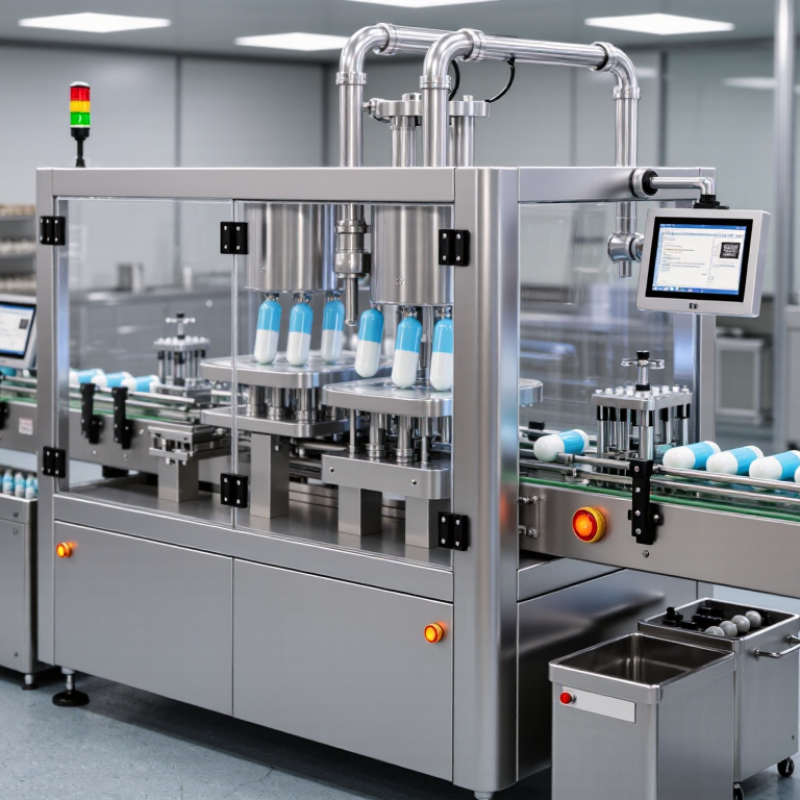
An automatic capsule filling machine is an integrated system that separates empty capsules, measures powder or granules, fills each body, and closes the shell. Sensors monitor capsule position, material flow, and fill weight during production. A control panel records operating settings, while dust extraction keeps the workspace cleaner.
The equipment supports repeatable dosing at a scale that manual filling cannot easily maintain. IQVIA’s Global Use of Medicines 2024 report forecasts worldwide medicine spending will reach about $2.3 trillion by 2028. This growth increases pressure on manufacturers to improve output without weakening quality controls. In practice, an automatic machine can process thousands of capsules per hour, depending on formulation, tooling, and capsule size.
Accuracy still requires judgment.
A dense powder may bridge inside the hopper. Humidity can change flow behavior. Operators must check weight variation, capsule locking, cleaning results, and machine calibration. The FDA’s Process Validation guidance emphasizes continued process monitoring, not one successful production run. That point is easy to overlook. Automatic does not mean self-correcting.
For reliable operation, manufacturers usually connect the machine with validated weighing procedures, documented cleaning steps, and in-process inspection. Operators with hands-on experience can identify unusual vibration, uneven powder levels, or incomplete capsule closure before waste increases. The machine provides consistency, but trained people remain essential.
Why Choose an Automatic Capsule Filling Machine? - What Is an Automatic Capsule Filling Machine?
| Data Dimension | Typical Information | Why It Matters |
|---|---|---|
| Definition | An automatic capsule filling machine separates empty capsules, meters the formulation into the bodies, joins the capsule halves, and discharges the filled capsules with limited manual intervention. | It combines several filling steps in one controlled production system. |
| Suitable Capsule Types | Commonly designed for hard two-piece capsules made from gelatin or plant-based materials. Supported capsule sizes often range from 000 to 5, depending on the machine configuration. | The capsule size affects formulation volume, tooling selection, and production setup. |
| Typical Production Capacity | Approximately 20,000 to 300,000 capsules per hour for many industrial systems. Actual output depends on machine size, capsule format, filling method, and powder characteristics. | Higher output can reduce labor requirements and improve batch consistency. |
| Filling Materials | Common materials include pharmaceutical powders, nutritional powders, herbal powders, pellets, and selected granules. Some machines can be configured for liquids or semi-solids. | The dosing system must match the material's flowability, density, moisture, and particle size. |
| Common Dosing Methods | Typical options include dosator systems, tamping-pin systems, auger dosing, pellet dosing, and liquid pumps. | Selecting the correct method helps achieve stable fill weight and reliable capsule closure. |
| Fill-Weight Consistency | Well-adjusted machines can provide consistent dosing, but practical performance varies with the formulation, calibration, environmental conditions, and operating speed. | Consistent fill weight supports product quality and helps meet applicable manufacturing specifications. |
| Automation Functions | Typical functions include capsule orientation, separation, powder dosing, capsule locking, rejected-capsule removal, and basic process monitoring. | Automation reduces repetitive handling and can improve process repeatability. |
| Changeover Requirements | Changing capsule sizes or formulations may require replacement or adjustment of tooling, dosing components, guides, and machine settings. | Simple changeover procedures are valuable for facilities producing multiple products. |
| Operator Requirements | Operators generally load materials, monitor the process, inspect capsules, adjust settings, and perform cleaning and routine maintenance. | Automation reduces manual filling work but does not eliminate the need for trained personnel. |
| Cleaning and Hygiene | Product-contact parts should be accessible for cleaning, inspection, and, where required, sanitation or validated cleaning procedures. | Good hygienic design helps reduce cross-contamination and supports regulated production. |
| Quality Control Points | Important checks include capsule orientation, fill weight, capsule locking, damaged-capsule detection, powder leakage, and batch documentation. | Routine checks help identify process variation before it affects a complete batch. |
| Main Advantages | Higher throughput, reduced repetitive labor, improved process consistency, controlled dosing, easier production scaling, and better batch repeatability. | These benefits are most valuable when production volume and quality requirements justify automated equipment. |
| Main Limitations | Higher initial investment, need for suitable formulation properties, regular cleaning, tooling changes, maintenance, and trained operation. | A feasibility review should consider total ownership cost rather than purchase price alone. |
| Best-Fit Production Scenario | Medium- to high-volume capsule production with repeatable formulations and documented quality requirements. | Automatic equipment generally provides the greatest value when demand is stable and production is continuous. |
| Key Selection Criteria | Required output, capsule sizes, dosing accuracy, formulation behavior, changeover time, cleaning access, safety features, installation space, utilities, and regulatory requirements. | Evaluating these factors helps ensure that the machine matches both current production needs and future capacity plans. |
Note: Capacity and performance figures are typical industry ranges. Actual results depend on the machine configuration, formulation properties, capsule size, operating conditions, and quality-control procedures.
Related Posts
-
2026 Top Capsules Filling Machine Trends and Innovations?
-
Top 10 Capsules Filling Machines You Need to Know About?
-
Top 10 Capsules Filling Machine for Global Buyers?
-
What is Capsules Filling Machine and How Does It Work?
-
Best Capsules Filling Machine for Efficient Production?
-
What is the Best Capsules Filling Machine for Your Business?